



Blog
Judo Fundamentals and the Complete Guide to Choosing a Judo Gi

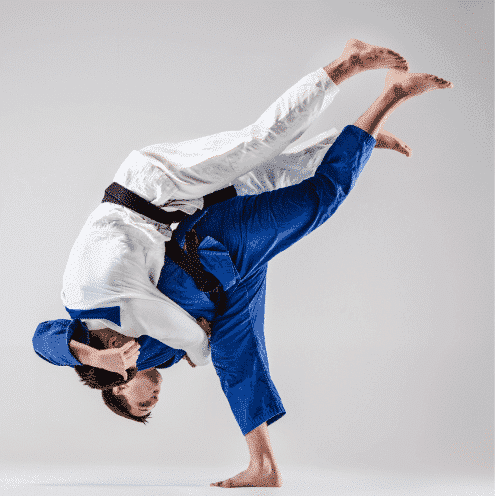
Founded in Japan in 1882 by Professor Jigoro Kano, Judo (“The Gentle Way”) is both a modern Olympic combat sport and a disciplined physical education system. Built on two guiding principles, Seiryoku-Zenyo (maximum efficiency with minimum effort) and Jita-Kyoei (mutual welfare and benefit), Judo teaches athletes how to use balance, leverage, and timing rather than raw muscular force to overcome an opponent.
Core Mechanical Pillars of Judo
1. Kumikata (Grip Fighting) and Shisei (Posture)
Every standing exchange in Judo begins with Kumikata, the battle for dominant grips on the opponent’s lapel (eri) and sleeve (sode). Maintaining an upright, relaxed posture (Shisei) keeps the athlete’s center of gravity stable while allowing rapid hip rotation and foot movement to control angles and block opponent entries.
2. Kuzushi, Tsukuri, and Kake (The Three Phases of a Throw)
In Kodokan Judo mechanics, every throwing technique (Nage-waza) follows a precise three-stage sequence:
- Kuzushi (Off-Balancing): Breaking the opponent’s structural balance by shifting their center of mass outside their base of support in one of eight directions.
- Tsukuri (Entry and Positioning): Fitting the body into the optimal mechanical position while maintaining continuous pull and contact.
- Kake (Execution): Completing the throw cleanly with control through hip rotation, leg sweeps, or reaps.
3. Ne-waza (Groundwork) and Ukemi (Safe Breakfalls)
When a throw does not score an immediate Ippon, the contest transitions seamlessly into Ne-waza, where athletes compete for pins (Osaekomi-waza), elbow joint locks (Kansetsu-waza), and strangles (Shime-waza). Supporting all standing and ground training is Ukemi, the art of safe breakfalls, which disperses impact across the mat and protects the head, spine, and joints.
Complete Rules for Choosing the Right Judo Gi
Unlike casual sportswear, a Judo Gi (uniform) is an active piece of technical equipment subjected to constant pulling, twisting, and friction. Selecting the right uniform directly affects comfort, durability, and competition eligibility.
1. Fabric Weave and GSM Weight
- Single Weave (350 to 550 GSM): Lighter, softer, and more breathable. Ideal for beginners, youth athletes, and high-volume conditioning sessions in warm climates.
- Double Weave (650 to 950 GSM): Thick, heavy-duty cotton or cotton-polyester blend built for advanced practitioners and heavy randori (free sparring). The dense weave resists tearing and makes it significantly harder for opponents to establish deep collar and sleeve grips.
2. Official Fit and Measurement Rules
Under international competition regulations, a properly fitted Judo Gi must meet strict dimensional standards:
- Sleeve Length: With both arms extended straight forward, the jacket sleeves must cover the full arm down to the wrist joint, leaving 10 to 15 cm of space around the forearm so an opponent can take a legal grip.
- Jacket Skirt: The lower flap of the jacket must be long enough to cover the hips and buttocks completely when tied with the belt.
- Trouser Length: Pants must reach down to the ankle bones (malleolus), with 10 to 15 cm of clearance around the lower leg.
- Shrinkage Allowance: Pure cotton uniforms typically shrink by 3% to 5% after the first few washes. Always verify whether the fabric is pre-shrunk before selecting your height size (usually sold in 5 cm increments such as 160 cm, 170 cm, or 180 cm).
3. White vs. Blue Judo Gi
A white Judo Gi remains the traditional standard for dojo etiquette, belt promotions, and daily training. A blue Judo Gi is required in official tournaments when called as the second competitor, ensuring clear visual distinction for referees, scoreboards, and spectators.
4. Collar Thickness and Reinforcement
Competition-legal jackets feature a stiff, multi-stitched lapel that must not exceed 1 cm in thickness or 4 cm in width, paired with reinforced diamond-weave panels across the chest, armpits, and trouser knees to withstand intense gripping and mat work.
Care Tips to Extend Your Judo Gi’s Lifespan
- Wash your uniform inside-out in cold water (30°C or lower) immediately after training to prevent sweat buildup and bacterial odor.
- Avoid chlorine bleach, which weakens cotton fibers and causes premature tearing under grip tension.
- Hang dry in a shaded, well-ventilated area rather than using a high-heat tumble dryer, which accelerates shrinkage and stiffens the collar.
Ready to upgrade your training kit? Explore our Judo equipment collection, browse durable Judo uniforms (Gi), and find official martial arts belts.
 Aikido
 Boxing
 Grappling
 Judo
 Jujitsu
 Taekwondo
 Karate
 Kickboxing
 Kurash
 Kung Fu
 MMA
 Muay Thai
 Sambo
 Sumo
 Wrestling
 ACCESSORIES
 BELTS
 GI / UNIFORMS
 GLOVES
 MATS
 PROTECTION
 SHOES
 SPORTS WEAR

