



Blog
Brazilian Jiu-Jitsu Fundamentals and the Complete Guide to Choosing a BJJ Gi

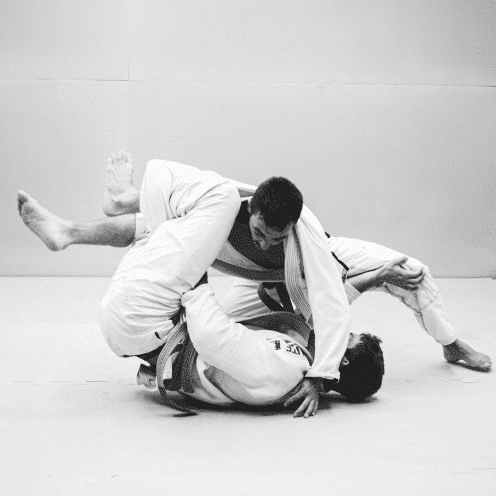
Brazilian Jiu-Jitsu (BJJ) is a grappling and ground-fighting martial art built around a clear mechanical truth: proper leverage, angle control, and anatomical timing allow a smaller, lighter practitioner to neutralize and submit a much larger, stronger opponent. Evolved from Kodokan Judo and traditional Japanese Jujutsu, BJJ has become a cornerstone of modern self-defense, sport grappling, and Mixed Martial Arts.
Core Tactical and Mechanical Pillars of BJJ
1. Position Before Submission
Unlike arts that rely on striking power, Jiu-Jitsu follows a strict positional hierarchy on the mat. Practitioners focus first on securing dominant control before attacking with joint locks or strangles:
- The Guard (Closed and Open): Fighting from the back while using the legs and hips to control distance, off-balance the top player, and set up sweeps or submissions.
- Half Guard and Guard Passing: Top players work systematically to clear the opponent’s legs, pin the hips, and establish chest-to-chest control.
- Side Control, Knee on Belly, and Mount: High-percentage pinning positions that restrict hip escape and force defensive reactions.
- Back Control: The most dominant position in Jiu-Jitsu, pairing hooks or body-triangle control with seatbelt grips behind the opponent’s shoulders.
2. Frames, Hip Escapes, and Base
Effective defense in BJJ relies on skeletal structure rather than muscular pushing. By building rigid forearm and shin frames, executing timely hip escapes (shrimping), and maintaining strong base, grapplers recover guard under heavy pressure without burning unnecessary energy.
3. Joint Locks and Blood Chokes
BJJ finishes a match cleanly through controlled submissions that compel an opponent to tap out safely. Key categories include shoulder and elbow locks (such as the armbar, kimura, and americana), leg locks, and neck strangles (such as the rear-naked choke, guillotine, triangle, and collar chokes).
Complete Rules for Choosing a BJJ Gi
In Gi Jiu-Jitsu, your uniform is both armor and a gripping surface. Choosing the right BJJ Gi improves mobility during long sparring rounds and ensures compliance with tournament inspection rules.
1. Fabric Weave Types and GSM Weight
- Pearl Weave (350 to 500 GSM): The modern industry standard. Pearl weave balances light weight, tear resistance, and fast drying times, making it ideal for both daily training and competition weigh-ins.
- Single Weave (300 to 450 GSM): Light and breathable for beginners or hot-weather training, though slightly easier for opponents to grip and stretch.
- Gold Weave (450 to 600 GSM): Combines the softness of single weave with the durability of double weave, offering a structured mid-weight feel.
- Double Weave (650 to 900+ GSM): Heavy, rigid cotton built for maximum grip resistance, though heavier on the scale and warmer during intense rounds.
2. Trouser Fabric: Ripstop vs. Cotton Twill
BJJ pants are typically made from cotton twill (soft, traditional, and comfortable during kneeling passes) or ripstop (a reinforced grid-woven cotton-polyester blend that resists tearing, weighs less, and dries quickly).
3. Sizing System (A0 to A5) and Fit Standards
Unlike Judo uniforms sold by height in centimeters, BJJ Gis use an alphanumeric sizing chart (A0, A1, A2, A3, A4, A5 for adults, with L for tall/slim frames and H for broader builds). Under IBJJF (International Brazilian Jiu-Jitsu Federation) rules:
- Sleeve Length: Must reach within 5 cm of the wrist bone when arms are extended straight forward, with at least 7 cm of clearance inside the cuff.
- Jacket Skirt: Must cover the glutes completely when tied with the belt.
- Trouser Length: Must reach within 5 cm of the ankle bone.
- Lapel Dimensions: Maximum thickness of 1.3 cm and maximum width of 5 cm, usually filled with quick-drying EVA foam rather than heavy cotton.
4. Competition Colors and Care
Official IBJJF tournaments permit only white, royal blue, or black Gis, with matching jacket and trousers. Always wash your BJJ Gi inside-out in cold water immediately after training and hang dry in the shade to prevent shrinkage and preserve fabric strength.
Looking to gear up for the mat? Explore our Jujitsu collection, browse durable martial arts uniforms (Gi), and find official training belts.
 Aikido
 Boxing
 Grappling
 Judo
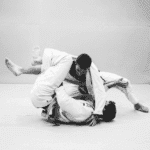 Jujitsu
 Taekwondo
 Karate
 Kickboxing
 Kurash
 Kung Fu
 MMA
 Muay Thai
 Sambo
 Sumo
 Wrestling
 ACCESSORIES
 BELTS
 GI / UNIFORMS
 GLOVES
 MATS
 PROTECTION
 SHOES
 SPORTS WEAR

